Pesto Pasta Revisted
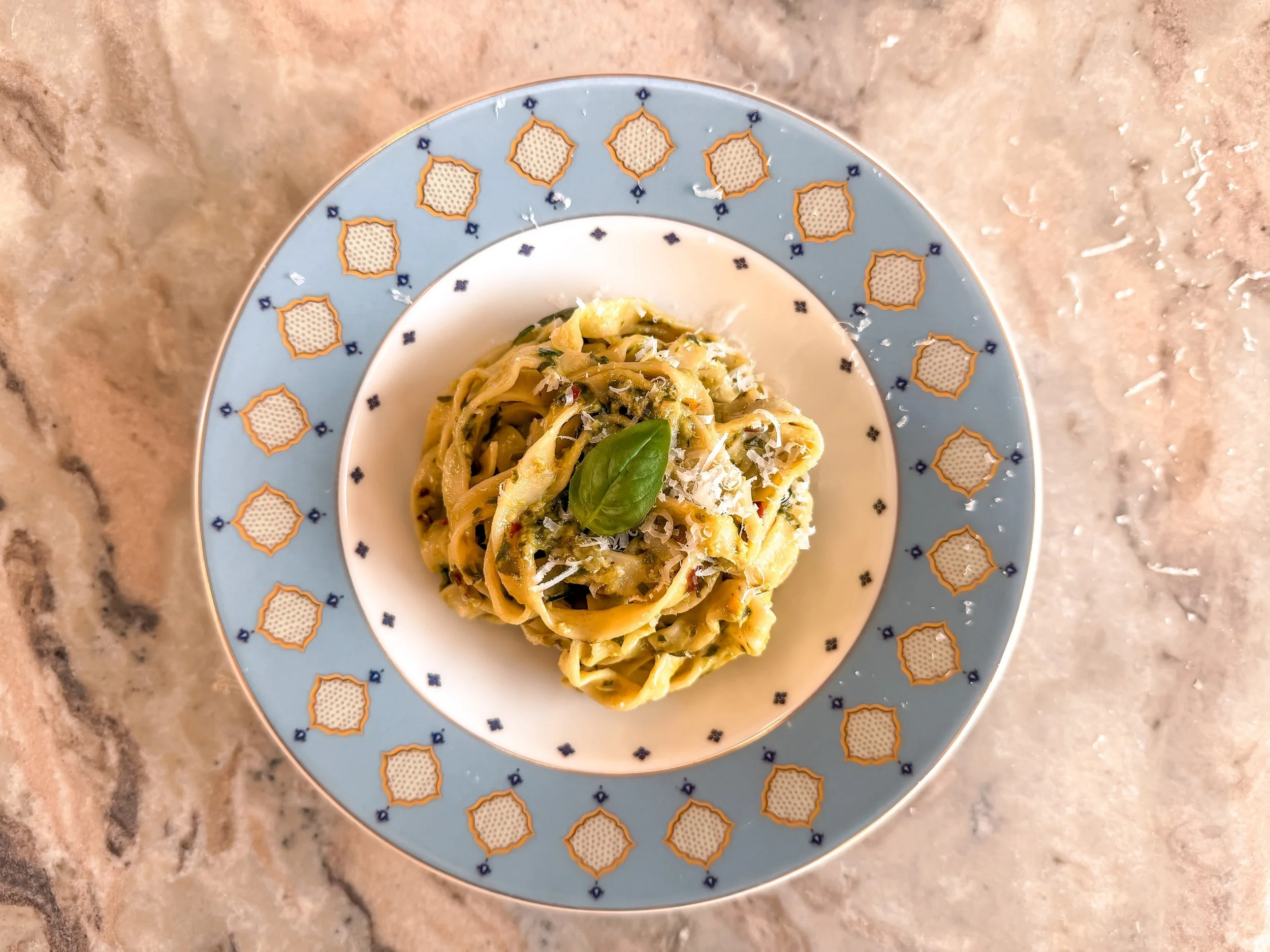
I’ve always said that if I were ever to get a tattoo, I’d get a basil leaf.
I don’t fully know why.
Maybe it’s because I just love basil that much. Maybe it’s because a few leaves can completely change the direction of a dish. It’s fresh, peppery, slightly sweet, and somehow makes everything feel more alive.
And honestly, it’s probably one of the reasons I wanted to build the ABCs of Pasta series in the first place.
Basil is such an important ingredient in Italian cooking, and pesto might be one of the best ways to understand why. It takes something delicate and fragrant, and turns it into a sauce that is punchy, creamy, salty, rich, and fresh all at once.
I even have my own basil plant now, and I protect it with my life.
So yes, P had to be pesto.
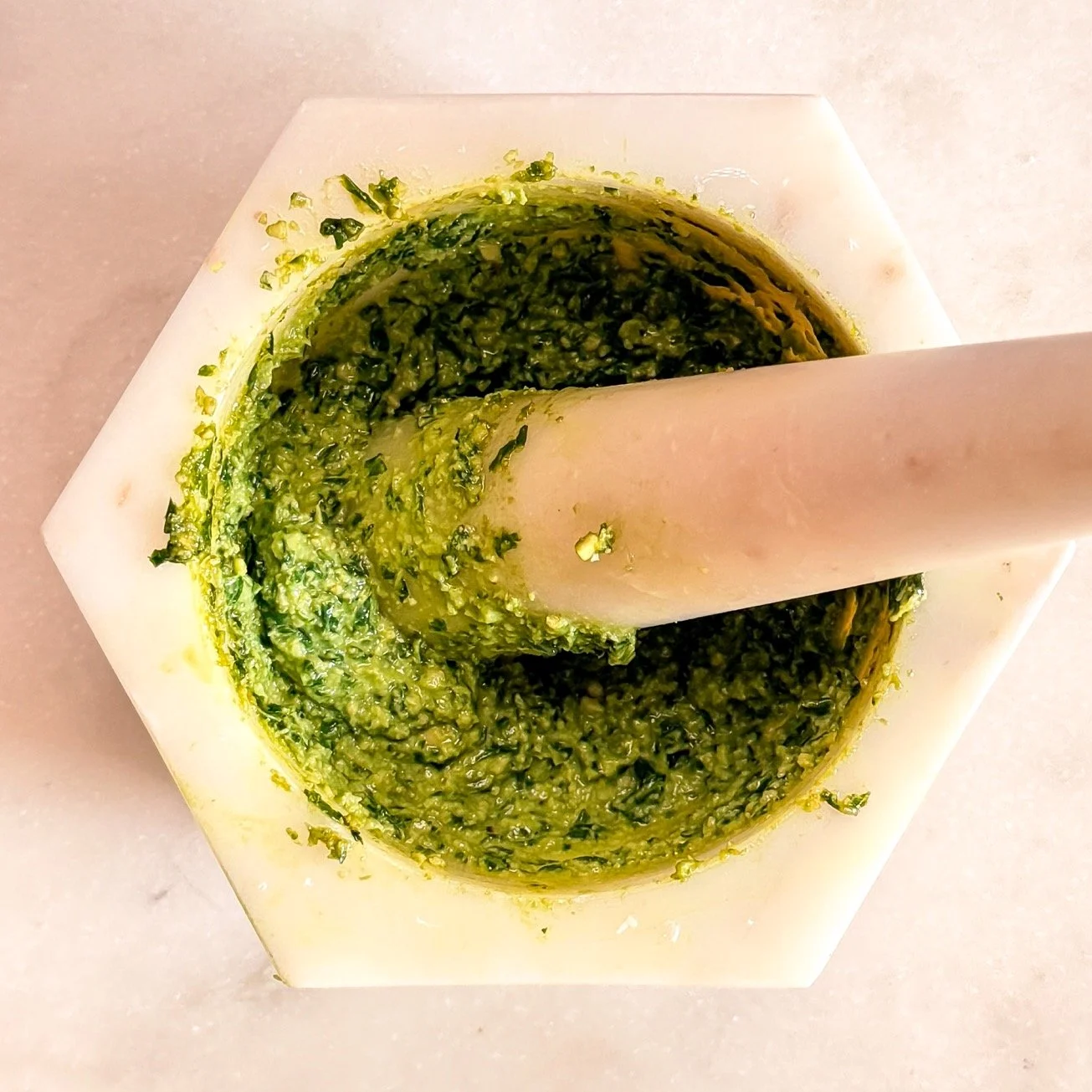
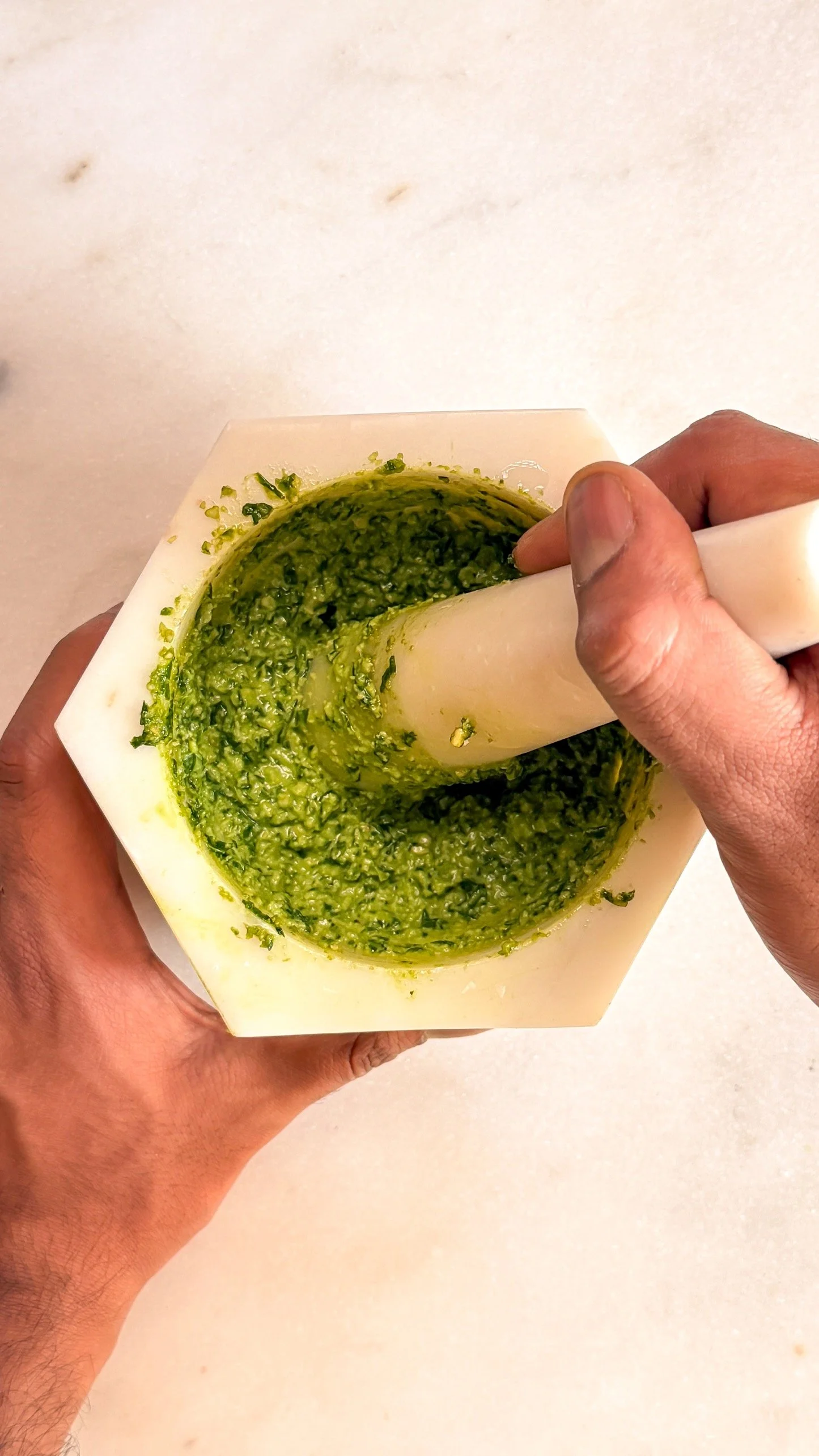
But not just any pesto. A good pesto. The kind you make slowly in a mortar and pestle. And I swear, it tastes better than the blended one.
Part of that is tradition. The word pesto comes from the Italian word pestare, which means “to crush” or “to pound.” The sauce was literally named after the way it was made.
A blender makes pesto smooth and quick, which is useful. But a mortar and pestle gives it texture. It crushes the basil instead of chopping it aggressively. You can actually see the colour change from a deep green to a lighter, creamier green as the oil, nuts, cheese, and basil slowly become one sauce.
It’s not perfectly smooth, and that’s the point. It’s grainy in the best way. A little rustic. A little uneven. And somehow that makes it taste more alive.
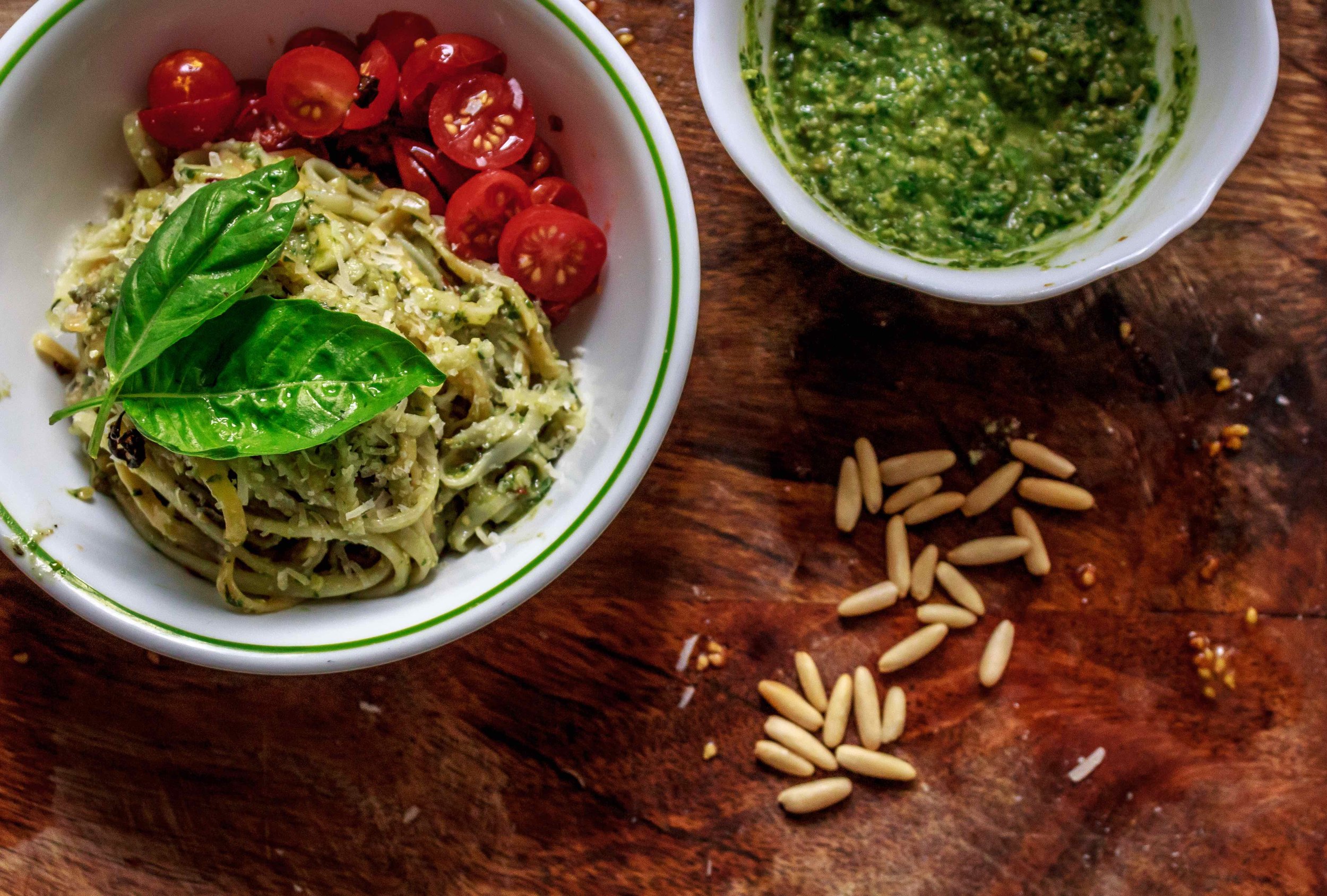
Traditionally, pesto uses pine nuts, but pine nuts are expensive and not always easy to find. I used toasted cashews, and honestly, I think they do the job beautifully. They bring richness, body, and a slight sweetness that works so well with basil.
This is one of those sauces where the quality really matters.
Fresh basil. Good olive oil. Freshly grated parmesan. A little lemon. Enough salt.
That’s it.
Simple, but only if you treat it well!
Ingredients
Pesto
1 packed cup fresh basil leaves
2 cloves garlic
½ tsp salt, or to taste
¼ cup toasted cashews
¼ cup olive oil, plus more if needed
¼ cup parmesan, freshly grated
1–2 tsp lemon juice
Pasta
200 g pasta
Salt, for boiling water
1 tbsp olive oil
½ tsp chilli flakes
¼ to ½ cup pasta water, as needed
Extra parmesan, to finish
Method
Bring a pot of salted water to a boil.
Cook the pasta till al dente. Reserve at least ½ cup of pasta water before draining.
To make the pesto, start with garlic and salt in a mortar and pestle.
Crush them together until the garlic starts breaking down into a rough paste.
Slowly add the basil leaves, a little at a time, and keep crushing.
Once the basil starts breaking down, add the toasted cashews and crush again until everything becomes thick, grainy, and fragrant.
Add olive oil slowly and keep mixing until the pesto starts loosening up.
Add freshly grated parmesan and lemon juice, and mix until it becomes creamy but still textured.
Taste and adjust salt or lemon if needed.
In a pan, heat olive oil and add chilli flakes. Let the oil take on some colour from the chilli.
Add the pesto with a splash of pasta water and mix until it loosens into a sauce.
Add the cooked pasta and toss until everything is coated. Add more pasta water if needed to get a glossy, saucy consistency.
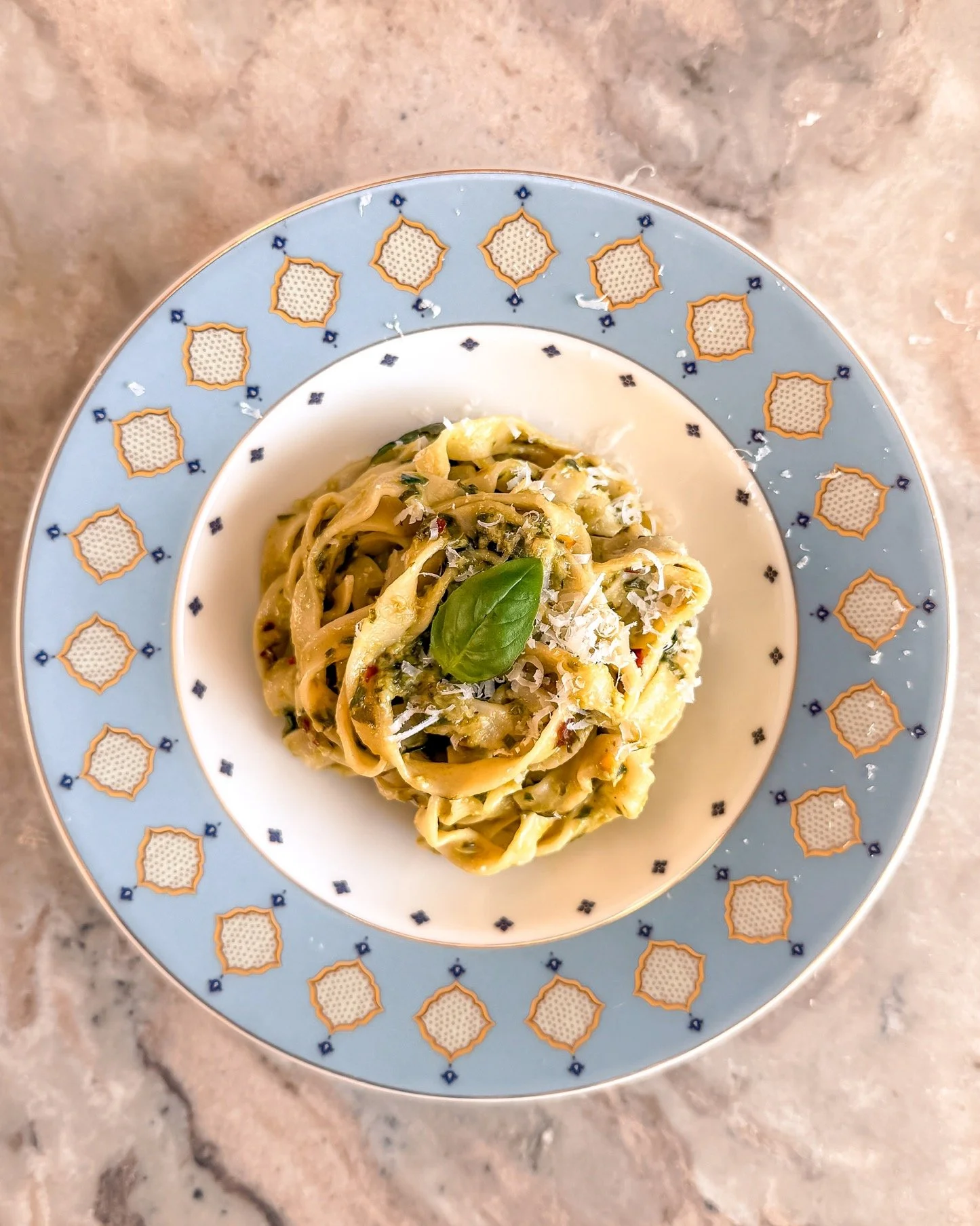
Finish with more parmesan and serve immediately.
Cooking Notes
A mortar and pestle gives pesto a more textured, rustic finish than a blender.
If you are using a blender, pulse gently instead of blending it into a completely smooth paste.
Cashews work really well here, but you can use pine nuts, walnuts, almonds, or even pistachios.
Don’t cook the pesto aggressively. You just want to warm it gently with the pasta and pasta water so it stays fresh and green.
The lemon juice is not traditional, but I like what it does. It brightens the sauce and keeps it from feeling too heavy.