Narangi Achaar
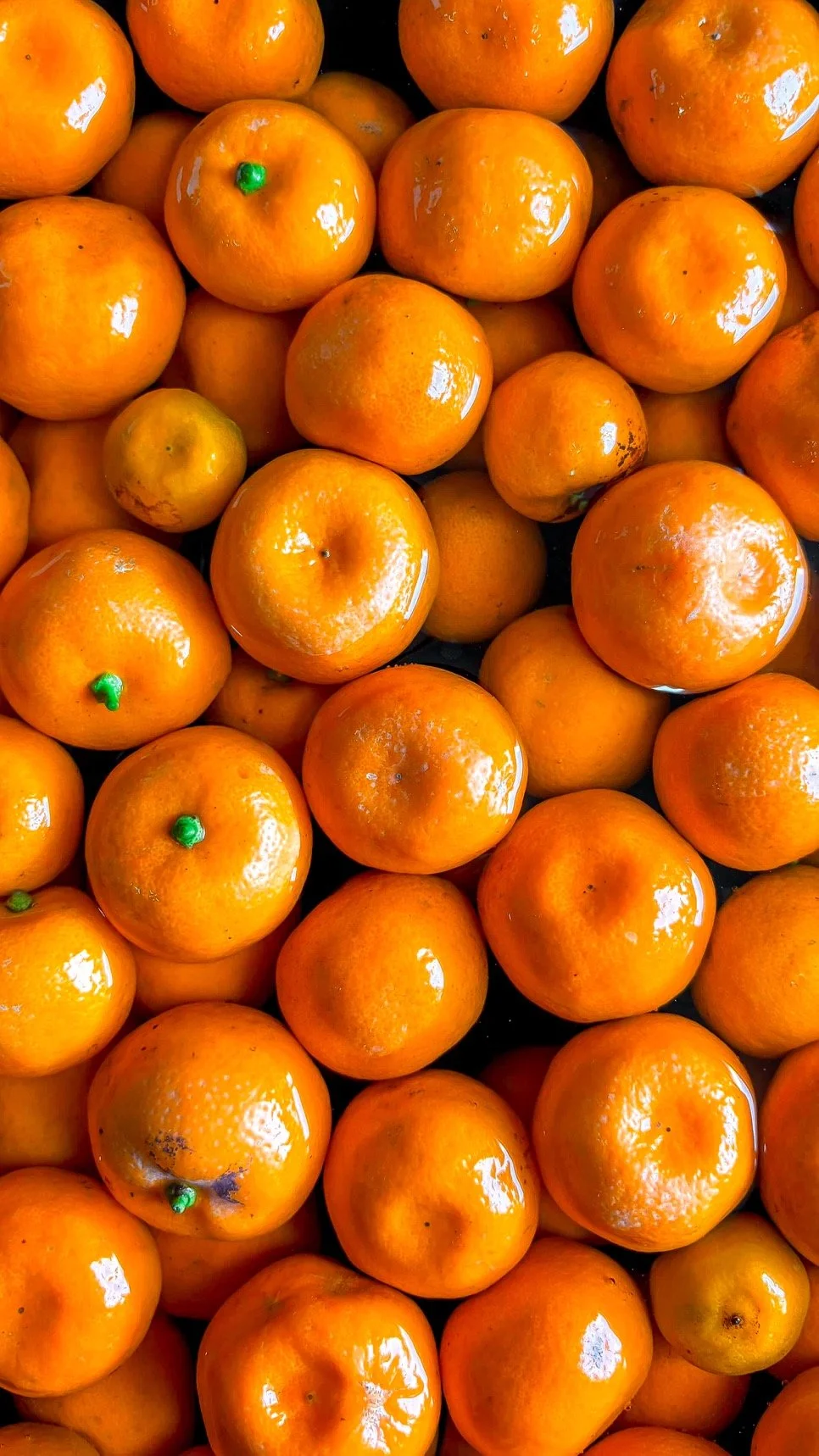
If you grew up in North India, you’ve probably lived through narangi season without thinking too much about it.
But these tiny oranges are not just “small oranges.”
Most of what we call narangi in North India are mandarins or kinnow-type citrus — winter varieties that thrive in Punjab, Haryana, Rajasthan and parts of Uttar Pradesh. They’re hardy trees. They fruit generously. And they’re often planted in homes because they’re low-maintenance and reliable.
Which is why they feel “everywhere.”
Unlike sweet commercial oranges, narangis are sharper. More aromatic. Their peel is thinner. Their oils are stronger. Their bitterness is more pronounced. That intensity is exactly why they work beautifully in preservation.
Why Narangis Work So Well For Achaar
High Natural Pectin
Citrus peel contains pectin — the natural setting agent that helps jams thicken. When you salt and sun-cure narangis, that pectin gently activates, giving the pickle body without needing to cook it down.Strong Essential Oils in the Peel
That sharp aroma you get when you scratch the skin? That’s citrus oil. In sweet oranges it’s mild. In narangis, it’s assertive. Sun-curing in mustard oil helps extract and mellow those oils.Balanced Bitterness
A good achaar needs tension — sweet, salt, heat, and a little bitterness. Narangis already bring that bitterness to the table. You don’t need to build it from scratch.Winter Sun Advantage
Citrus + mustard oil + salt + sunlight is an old preservation logic. The warmth softens peel structure, the salt pulls moisture, and the oil prevents spoilage while carrying flavour.
The result is not jam. Not chutney. Not candied peel.
It’s something sharper. Deeper. More alive.
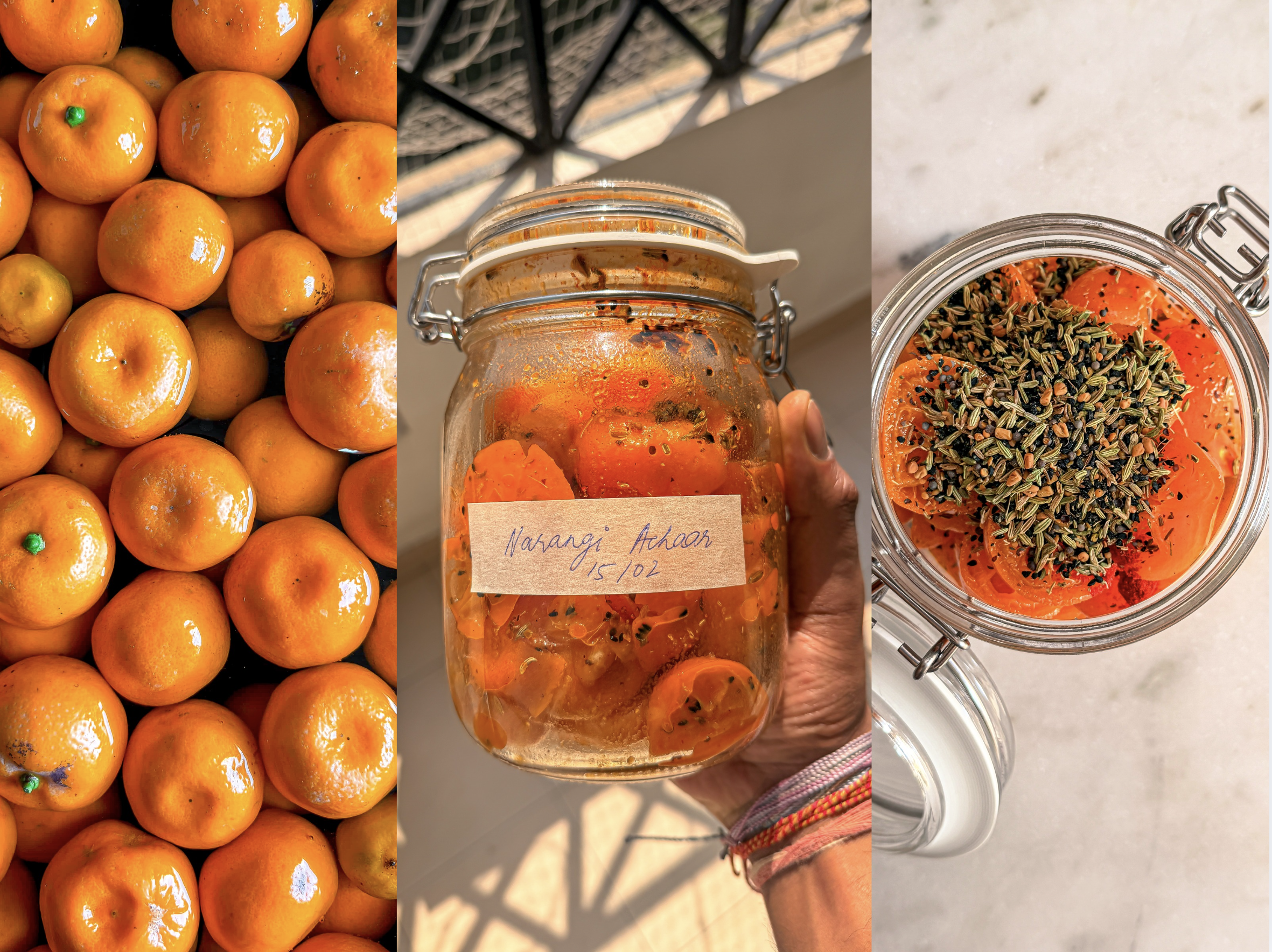
This narangi achaar leans sweet and spicy, using toasted paanch phoran for warmth and complexity. Over two to three days, the peel softens, the syrup thickens naturally, and the flavours settle into something that tastes like winter, but keeps for much longer.
Recipe
Ingredients
1 kg narangis (washed, halved, mostly deseeded)
2 tbsp sugar (adjust to taste)
1 tsp salt (adjust to taste)
1 tsp red chilli powder
2 tbsp mustard oil (warmed)
Paanch Phoran
1 tsp fennel seeds
½ tsp fenugreek seeds
½ tsp kalonji
½ tsp black mustard seeds
½ tsp cumin seeds
Method
Wash and halve the narangis. Remove as many seeds as possible.
Dry-toast the paanch phoran spices until fragrant.
Lightly crush them using a mortar and pestle.
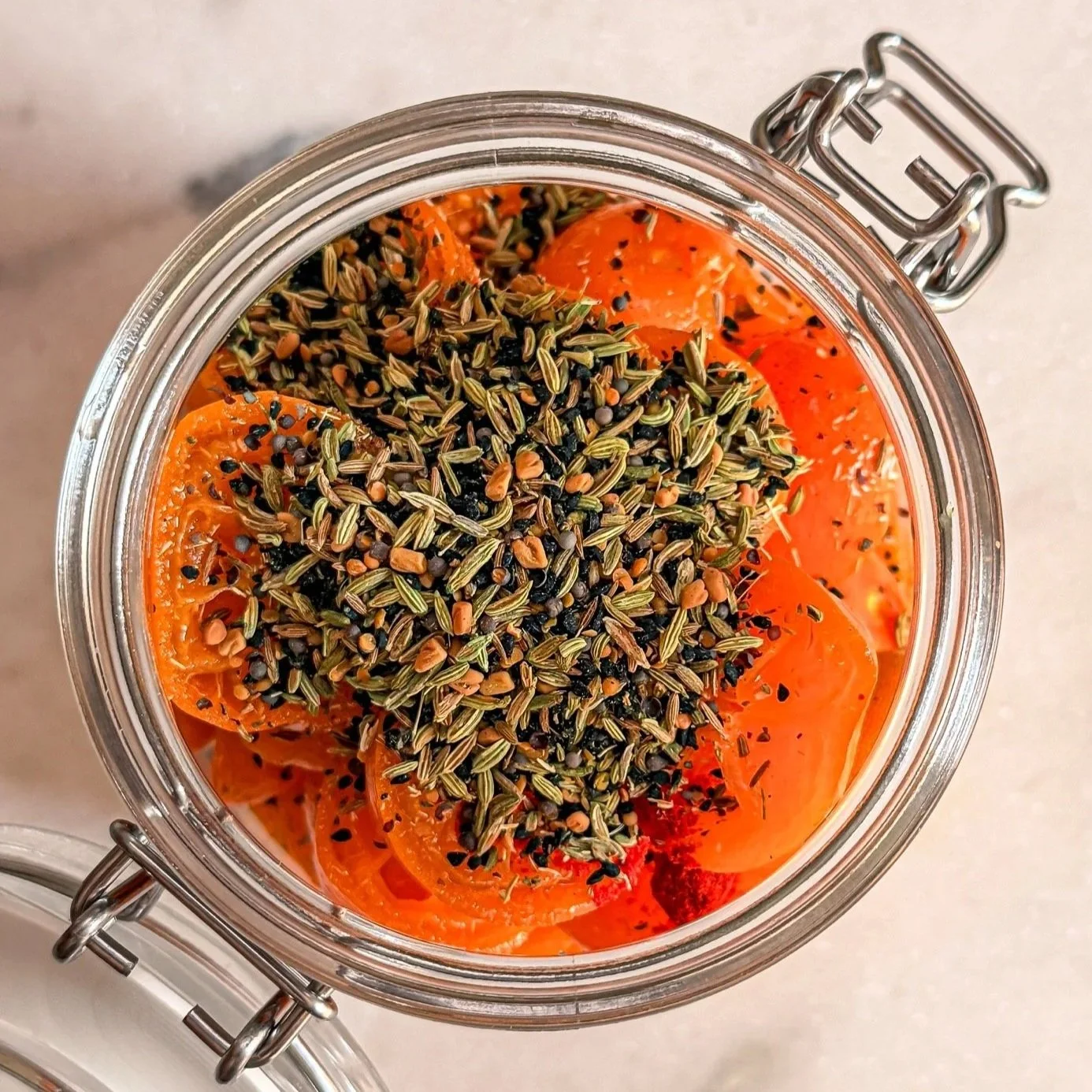
Add narangis to a clean, dry glass jar.
Add sugar, salt, red chilli powder and crushed spices.
Warm the mustard oil and pour over.
Mix thoroughly to coat.
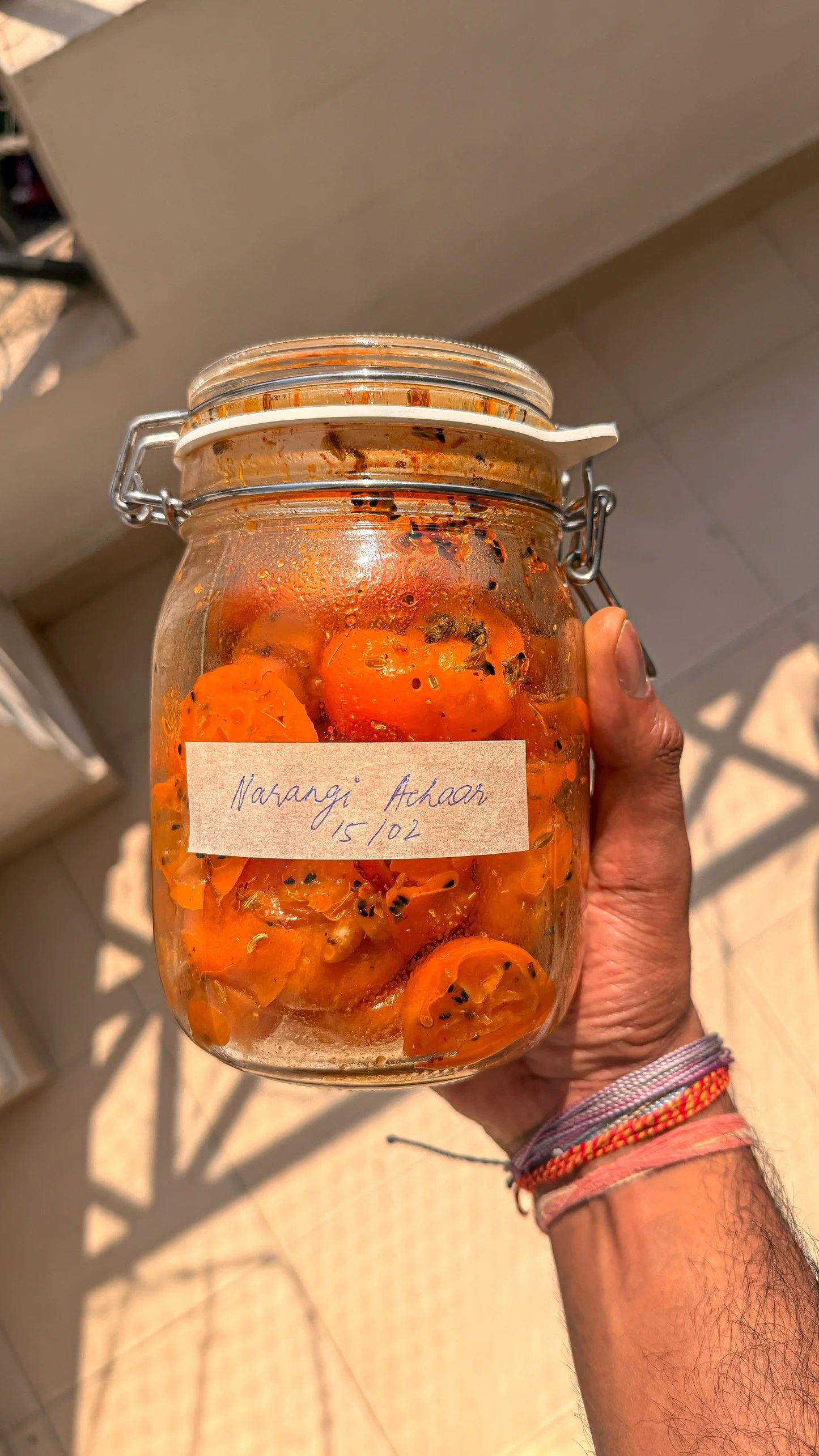
Seal and keep in direct sunlight for 2–3 days.
Shake the jar once daily.
The achaar is ready when the peel softens and the syrup turns glossy.
Refrigerate after sun-curing.