Haak Saag
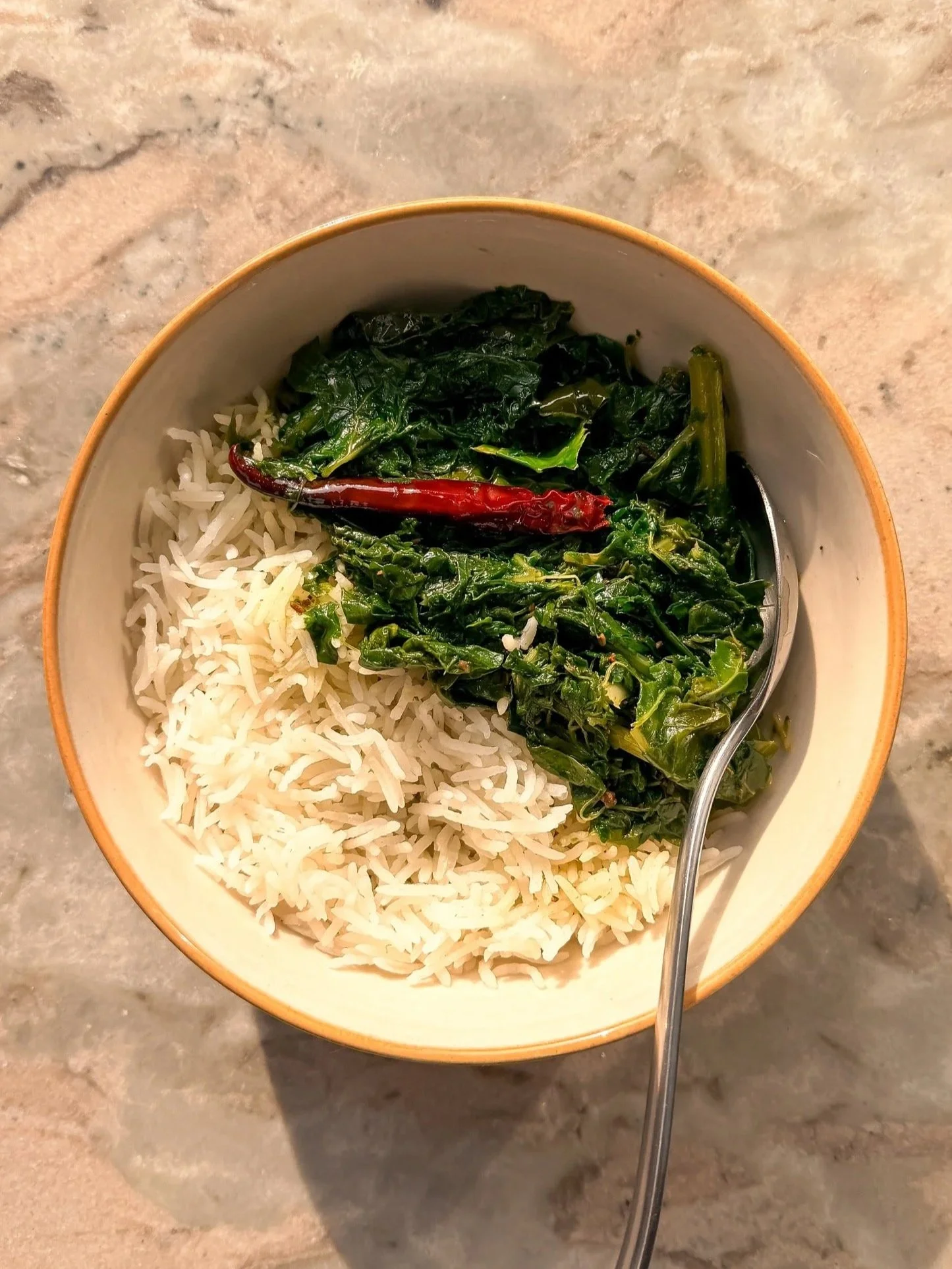
There are some dishes that feel festive.
And then there are dishes that feel like someone’s everyday.
Haak is the second kind.
I first heard about it during a regular vegetable run. A stranger mentioned it casually, like it was obvious, like it was something everyone should know. I went home, asked around, and what I received wasn’t just a recipe — it was a flood of small corrections, personal versions, and family habits. That’s when I realised this isn’t one of those dishes that belongs to a single method. It belongs to kitchens.
So this version sits somewhere between what I was told, what I read, and what felt right to me.
What Is Haak?
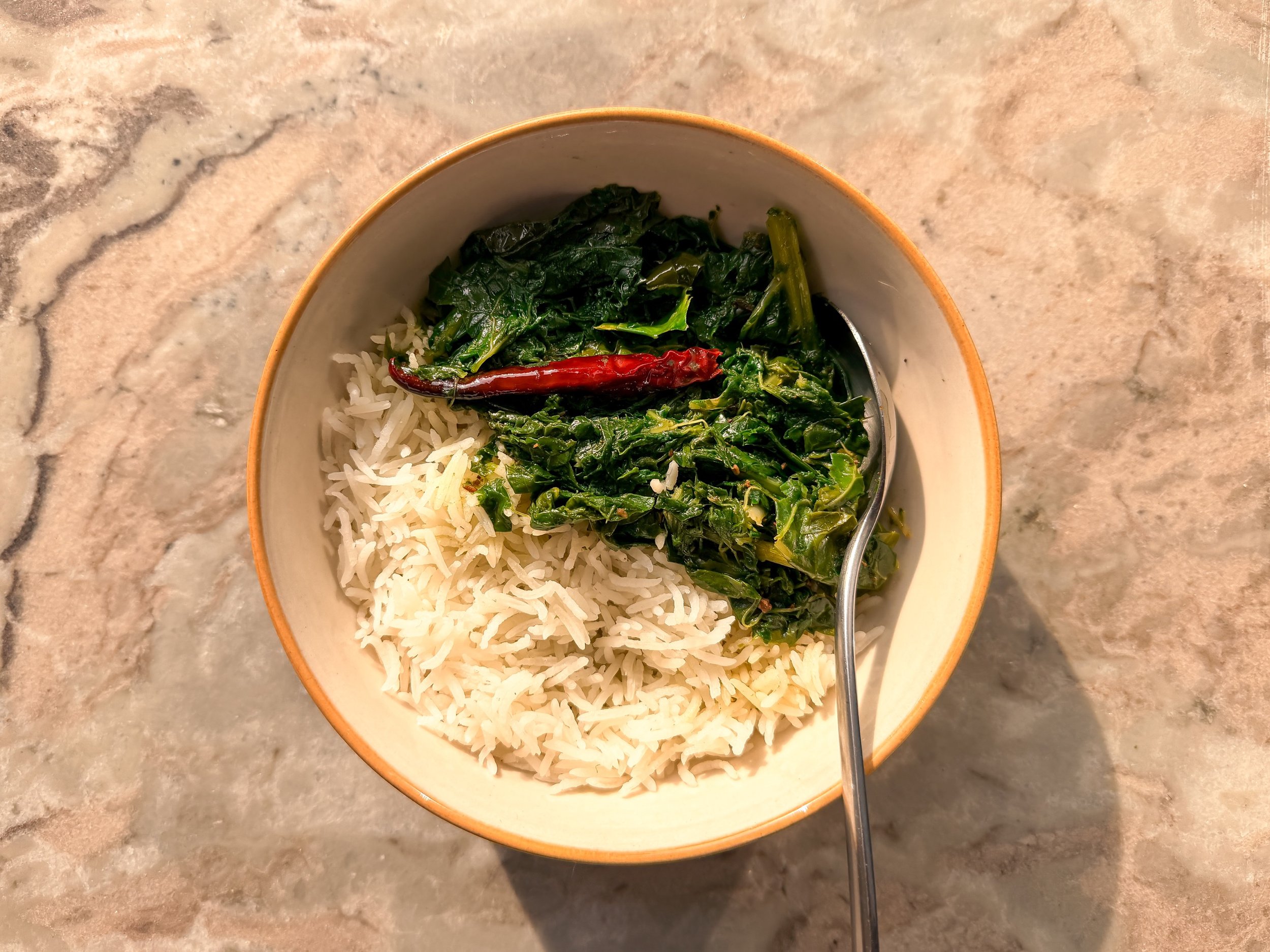
In Kashmir, haak simply means greens. But when someone says “haakh,” they usually mean a preparation of Kashmiri collard greens — thick, sturdy leaves that thrive in the Valley’s cold winters.
Unlike the Punjabi-style saag many of us are used to — heavy, slow-cooked, and spiced — Kashmiri haak is intentionally minimal.
No tomatoes.
No elaborate masalas.
No cream.
A Dish Shaped by Climate
Kashmir’s food culture is deeply tied to its geography. Long winters meant relying on seasonal produce and straightforward cooking techniques that preserved both nutrition and flavour.
Haak became a staple — eaten daily with rice, often alongside yogurt or a simple dal. It’s not celebratory food. It’s sustaining food.
The greens themselves are interesting. Kashmiri collard greens are slightly thicker and mildly sweeter than regular collards. The stems aren’t discarded — they soften beautifully when cooked and add subtle sweetness and texture
Why Some People Add Baking Soda
A few traditional recipes call for a tiny pinch of baking soda while boiling the greens.
The science is simple: leafy greens contain chlorophyll. When exposed to heat and acidity, chlorophyll can dull in colour. A small amount of baking soda (which is alkaline) helps preserve that vibrant green hue.
It’s optional. And if used, it should be minimal — too much can affect both texture and flavour.
Recipe
Ingredients
Kashmiri collard greens / haak leaves – 1 large bunch
(regular collard greens work too)Mustard oil – 1 to 1½ tbsp
Asafoetida (hing) – a small pinch
Dried red Kashmiri chilli – 1
Fennel (saunf) powder – ¼ tsp
Salt – to taste
Water – about ½ cup
A tiny pinch baking soda (optional)
Method
Clean the greens thoroughly
Wash the leaves well to remove any grit. Rip the leaves as you add them to step 2.Cook the haak
In a wide pan, add the chopped greens, salt, water, and a tiny pinch of baking soda (if using).
Cover and cook on medium for 8–10 minutes until soft and bright green.Prepare the tempering
Heat mustard oil until it just begins to smoke lightly.
Switch off the heat.
Add hing and the dried red chilli.Finish the dish
Pour the tempering over the greens.
Add fennel powder and mix gently.
Do not overcook after this stage.
Serve hot with steamed rice and a spoon of yogurt on the side.