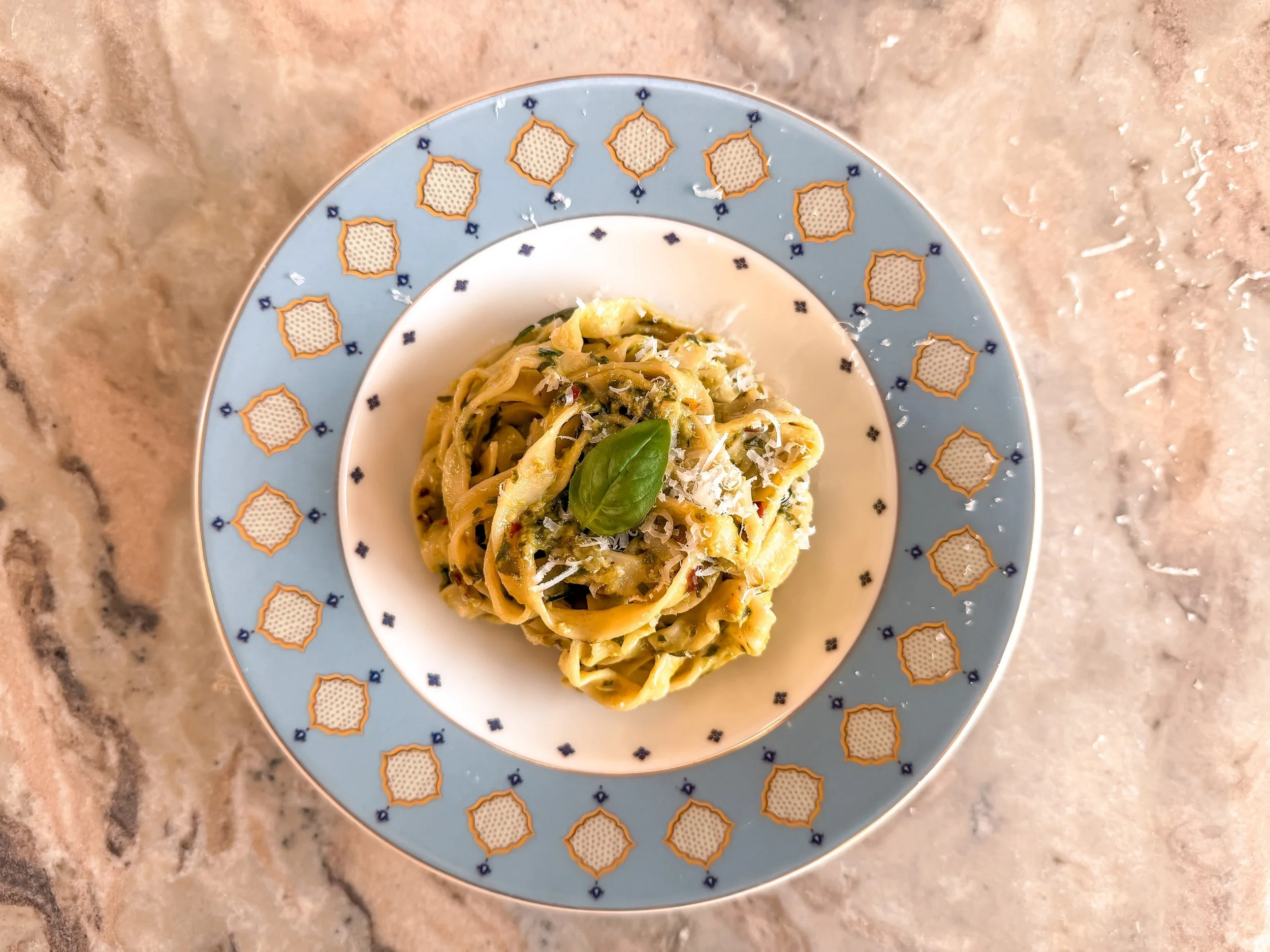
Fettucine Alfredo
If you’ve grown up in India, there’s a good chance you’ve had something called Alfredo pasta.
It’s usually rich, creamy, sometimes loaded with vegetables, and almost always starts with a roux — butter, flour, milk — a classic white sauce.
And to be fair, it’s delicious. But it’s not Alfredo.

Where Alfredo actually comes from
The original dish comes from Rome, and it’s far simpler than most people expect.
It was popularised by a restaurateur named Alfredo di Lelio in the early 1900s. The story goes that he created it for his wife, who had lost her appetite after childbirth — something rich, comforting, and easy to eat.
And the dish he made was just fresh pasta, butter and parmesan.
That’s it! No cream. No flour. No garlic.
So where did the “white sauce Alfredo” come from?
That version is more of an Italian-American evolution.
As the dish travelled, it got heavier. Cream was added to make it more stable, more indulgent, and easier to recreate in restaurant kitchens at scale.
In India, it evolved even further into what we now call white sauce pasta — built on a roux, creamy, thick, and very comforting in its own way.
But the original Alfredo is different.
What makes it special
The magic of Alfredo isn’t in the ingredients — it’s in the technique.
When you toss hot pasta with butter, parmesan, and a bit of pasta water, something happens:
the butter melts
the cheese emulsifies
the starch in the water brings it all together
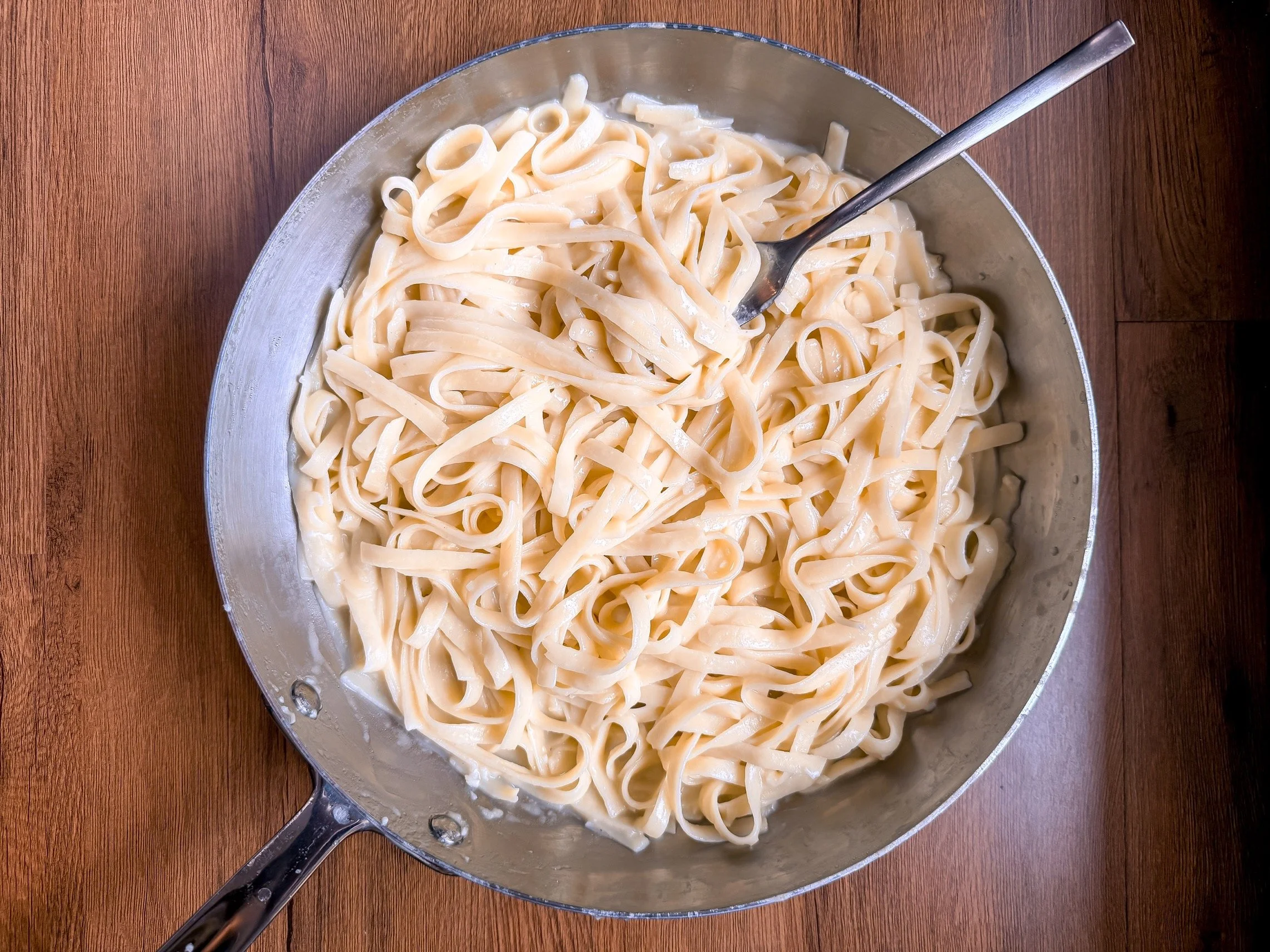
And what you get is a sauce that’s silky, glossy, and light, despite being made almost entirely of fat and cheese
It coats the pasta without ever feeling heavy.
Recipe (Serves 2)

Ingredients
200 g fettuccine (or any pasta you have)
2 litres water
2 tsp salt
40 g butter (about 3 tbsp)
½ cup (40–50 g) parmesan, finely grated
¼ cup (60 ml) pasta water (adjust as needed)
Method
1. Cook the pasta
Bring water to a boil and salt it well. Cook the pasta till just al dente.
Reserve ½ cup pasta water, then drain.
2. Build the sauce
In a wide pan (off heat), add butter.
Add the hot pasta directly on top — the residual heat will start melting the butter.
3. Emulsify
Add a splash of pasta water and start tossing.
Now add the parmesan, a little at a time, while continuously tossing.
👉 This is key — don’t dump it all in at once.
Keep adding small amounts of pasta water until the sauce turns smooth, glossy, and coats the pasta evenly
4. Finish
Taste and adjust salt if needed, and serve immediately!