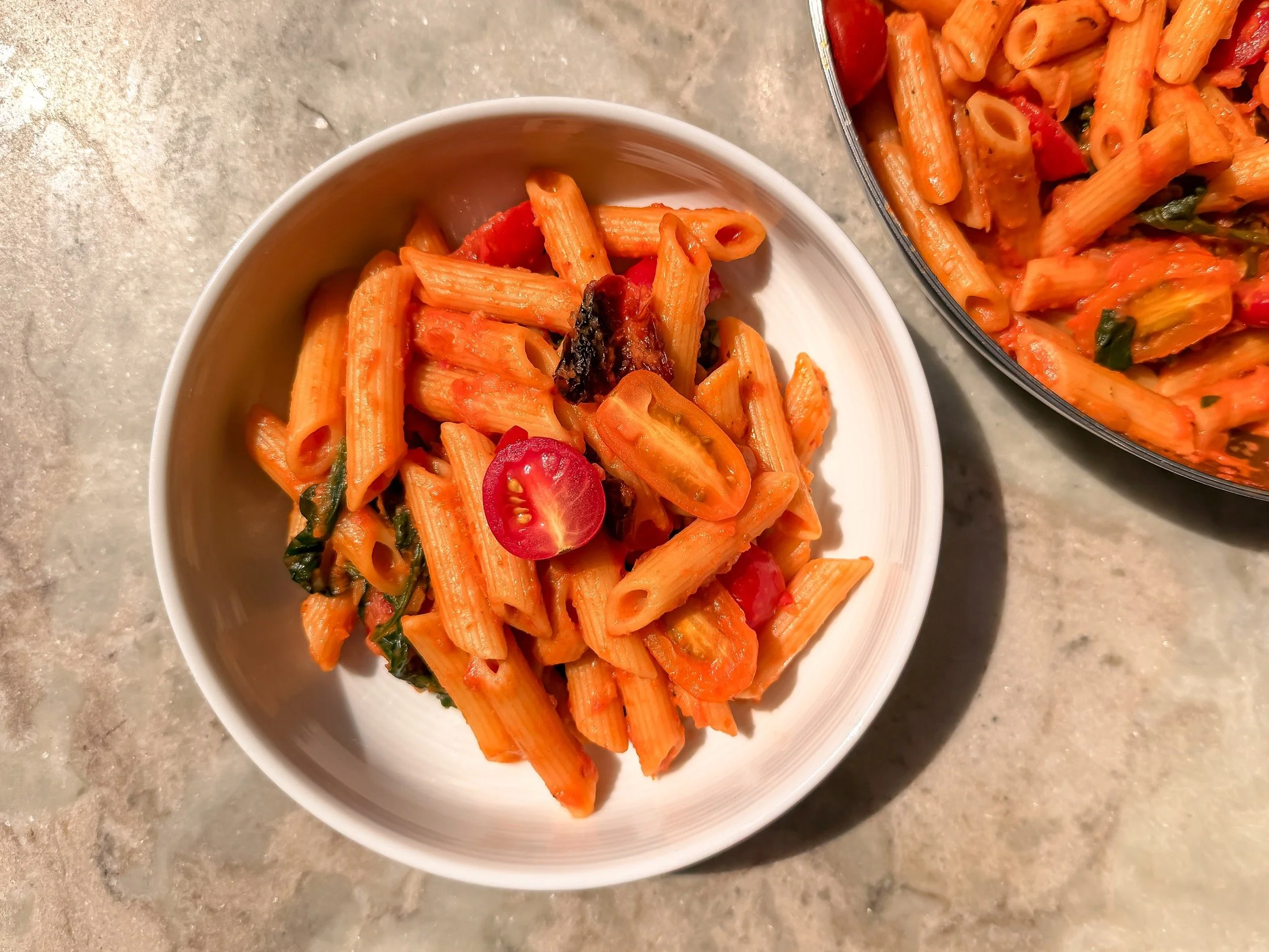
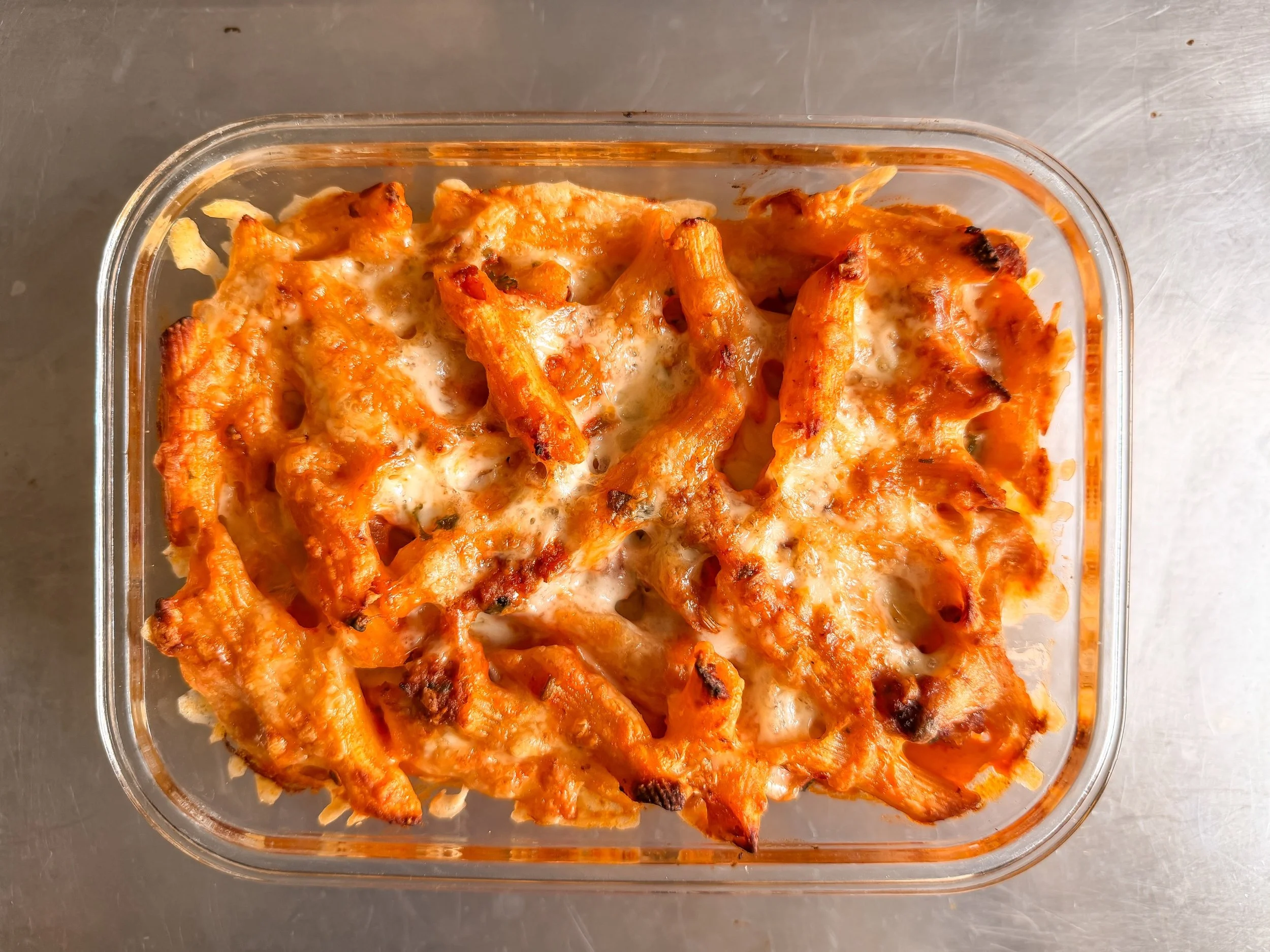
Baked Ziti
I didn’t grow up eating baked ziti.
The pasta I knew was lighter, quicker — tossed in a pan, eaten hot, and done. Nothing about it felt like something that needed to sit in an oven.
That changed when I moved to Ohio.
Winters there weren’t just cold — they were relentless. The kind where stepping outside felt like a mistake you had to commit to. I remember one afternoon in particular — it must have been close to -10°C — the kind of day where even walking between classes felt like a small endurance test.
Lunch that day was baked ziti.
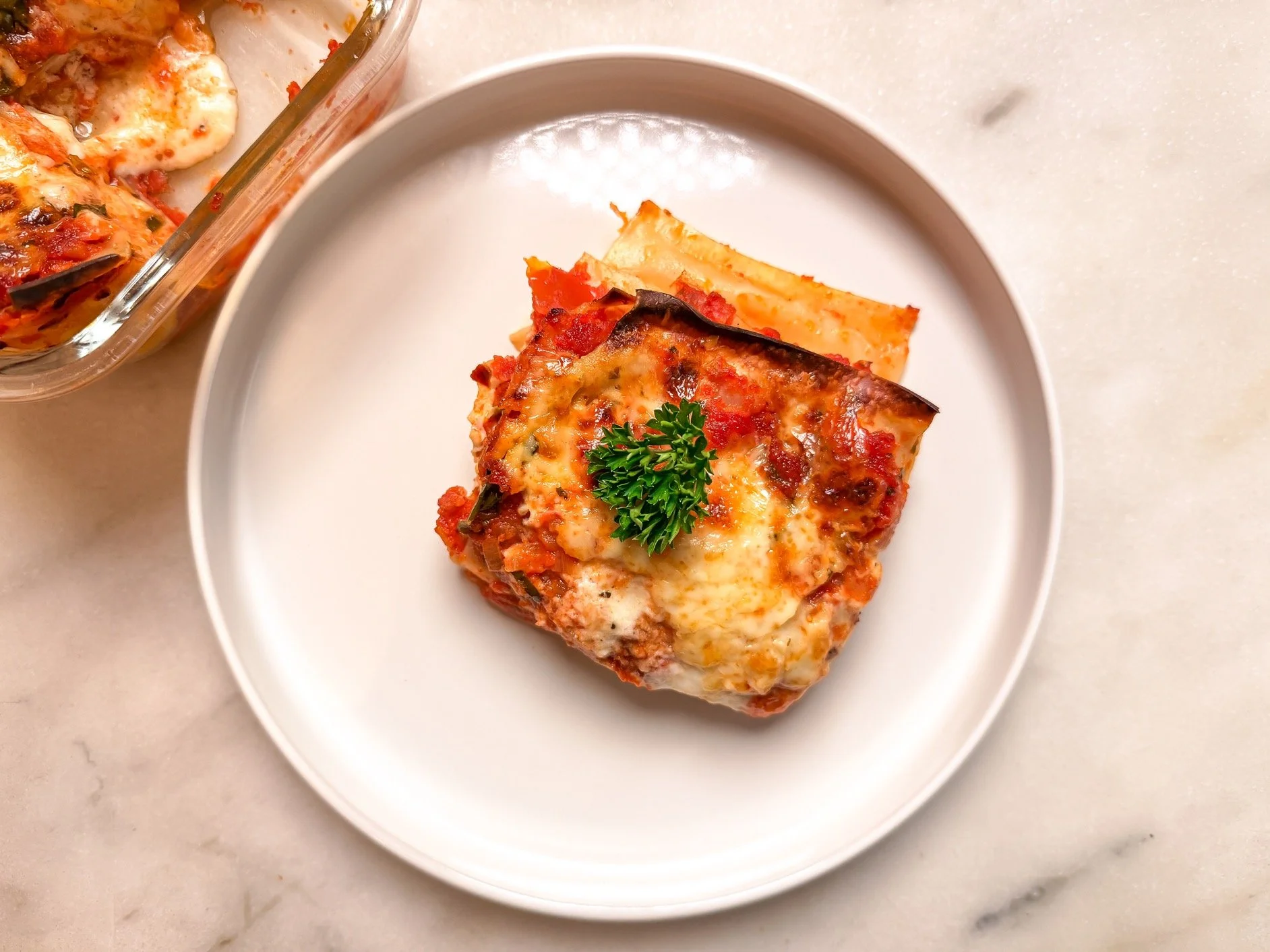
It came in one of those large metal trays from the dining hall. Nothing about it looked perfect. The top was unevenly browned, the edges slightly overcooked, and the sauce had settled into places it probably shouldn’t have. But it was hot. Properly hot.
And that’s what mattered.
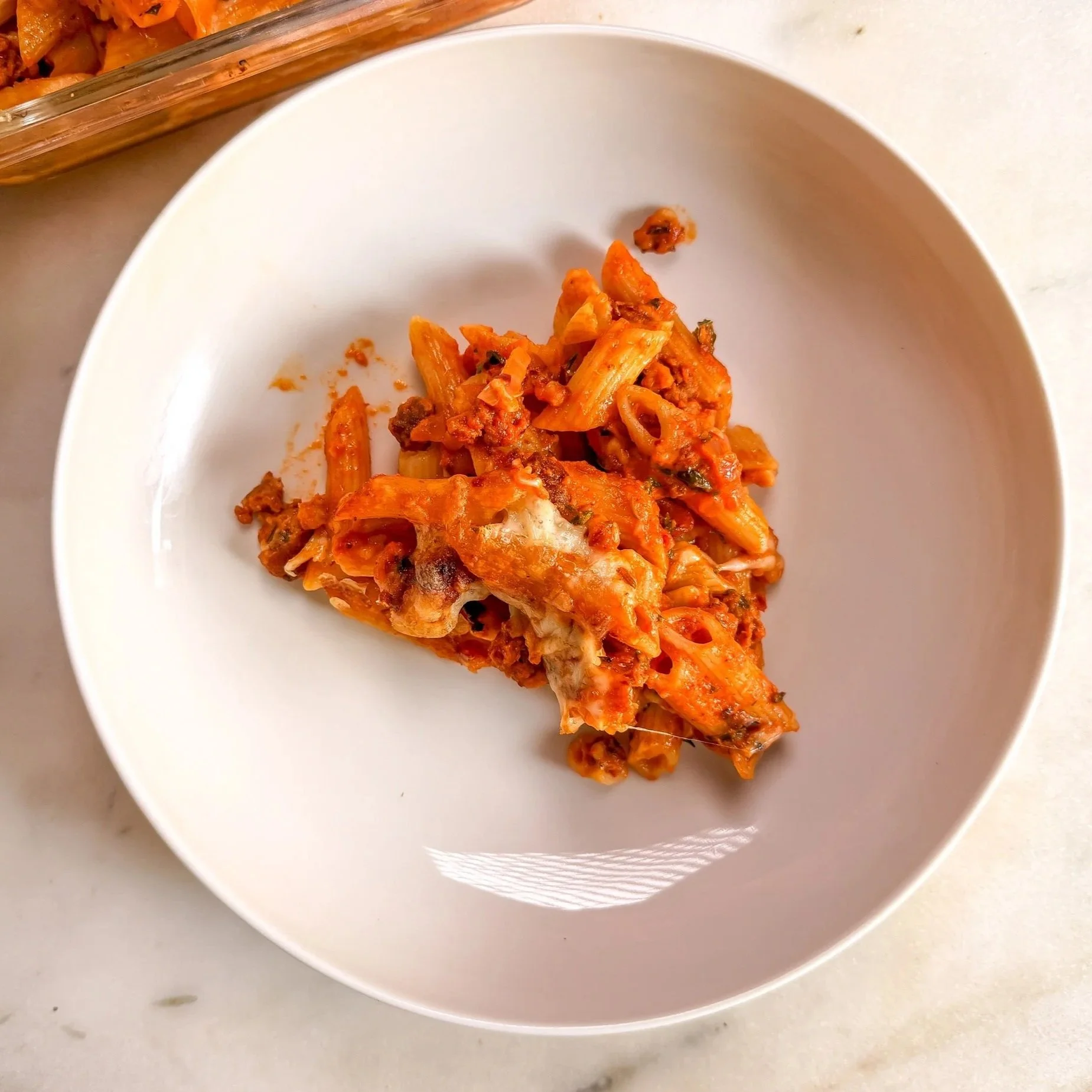
The first bite was exactly what you needed in that moment — the cheese stretching just enough, the tomato sauce still bubbling underneath, and bits of sausage cutting through with a little bit of heat. It wasn’t refined. It wasn’t delicate. But it did the job.
And sometimes, that’s exactly what food is supposed to do.
A little bit of history
Despite how Italian it sounds, baked ziti is more of an Italian-American creation than a traditional Italian dish.
In southern Italy, there are baked pasta dishes — grouped under what’s called pasta al forno (literally “oven-baked pasta”). These were often made for celebrations — layered with sauce, cheese, sometimes meat, and baked until everything came together into one cohesive dish.
But baked ziti, as most of us know it — with its generous cheese, hearty tomato sauce, and sausage — really took shape in the United States, especially in Italian-American communities.
It’s practical food.
You can make it ahead.
You can feed a lot of people.
And most importantly, it holds heat — which suddenly makes a lot of sense when you think about winters in places like Ohio.
Why it stuck with me
Looking back, baked ziti isn’t the best pasta I’ve ever had.
But it might be one of the most memorable.
Because it taught me something I didn’t really think about before — that some dishes aren’t about precision or perfection. They’re about comfort, scale, and timing.
It’s food that shows up when you need it.
And over time, I’ve realised that’s something worth recreating — just with a little more intention.
Recipe (Serves 4)
Ingredients
Pasta
300 g penne (or ziti if you find it)
3 litres water
1 tbsp salt
Sauce Base
300 g spicy Italian pork sausage (casings removed)
(or 250–300 g finely chopped mushrooms for a veg version)1 tbsp olive oil (only if needed — sausage releases fat)
4–5 cloves garlic, minced
1 medium onion, finely chopped
Tomato Layer
1 cup (240 ml) tomato puree
2 tbsp tomato paste
½ tsp dried oregano
¼ tsp dried rosemary (go light)
½ tsp fennel seeds (lightly crushed)
½–1 tsp chili flakes (adjust to taste)
½ tsp black pepper
6–8 fresh basil leaves (or ½ tsp dried)
Finish
½ cup (120 ml) pasta water
¼ cup (60 ml) cream
2 tbsp fresh parsley, chopped
For Baking
150–180 g mozzarella, grated
👨🍳 Method
1. Cook the pasta
Bring water to a boil, salt it well.
Cook the penne 2 minutes short of package instructions — it’ll finish in the oven.
Reserve ½ cup pasta water, then drain.
2. Build the base
In a wide pan, cook the sausage on medium heat, breaking it up.
Let it brown properly — this is where flavour builds.
(If using mushrooms: cook till they release water and start to brown)
Add garlic + onion → cook till soft and lightly golden.
3. Build the sauce
Add tomato puree and let it simmer for 2–3 minutes.
Add tomato paste + all your aromatics: oregano, rosemary, fennel, chili flakes, pepper and basil.
Cook this down for 5–7 minutes till it thickens and deepens in colour.
4. Bring it together
Add pasta water → loosen the sauce.
Add cream → this rounds everything out.
Toss in the pasta + parsley.
Mix till everything is well coated.
5. Bake
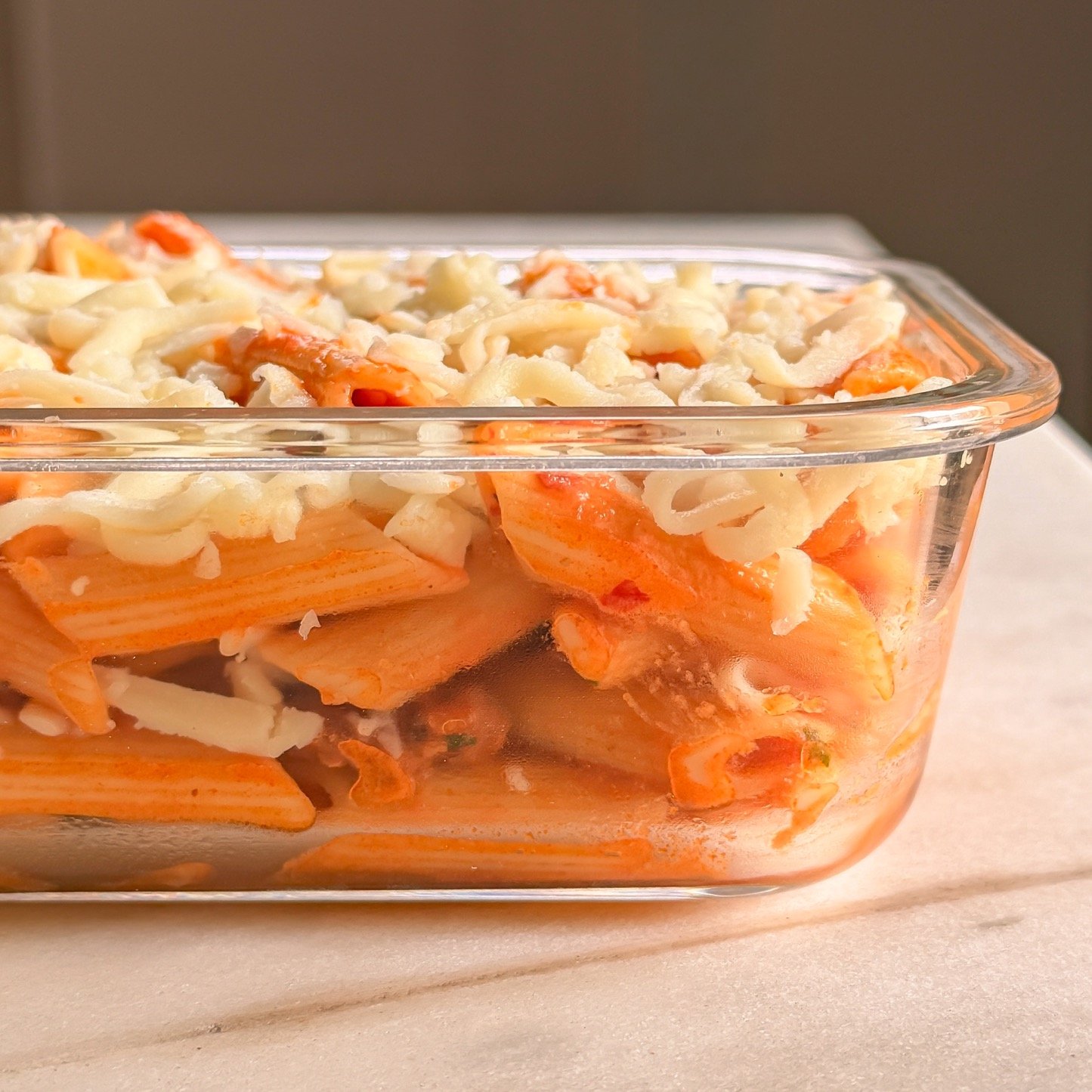
Transfer to an oven-safe dish.
Top generously with mozzarella.
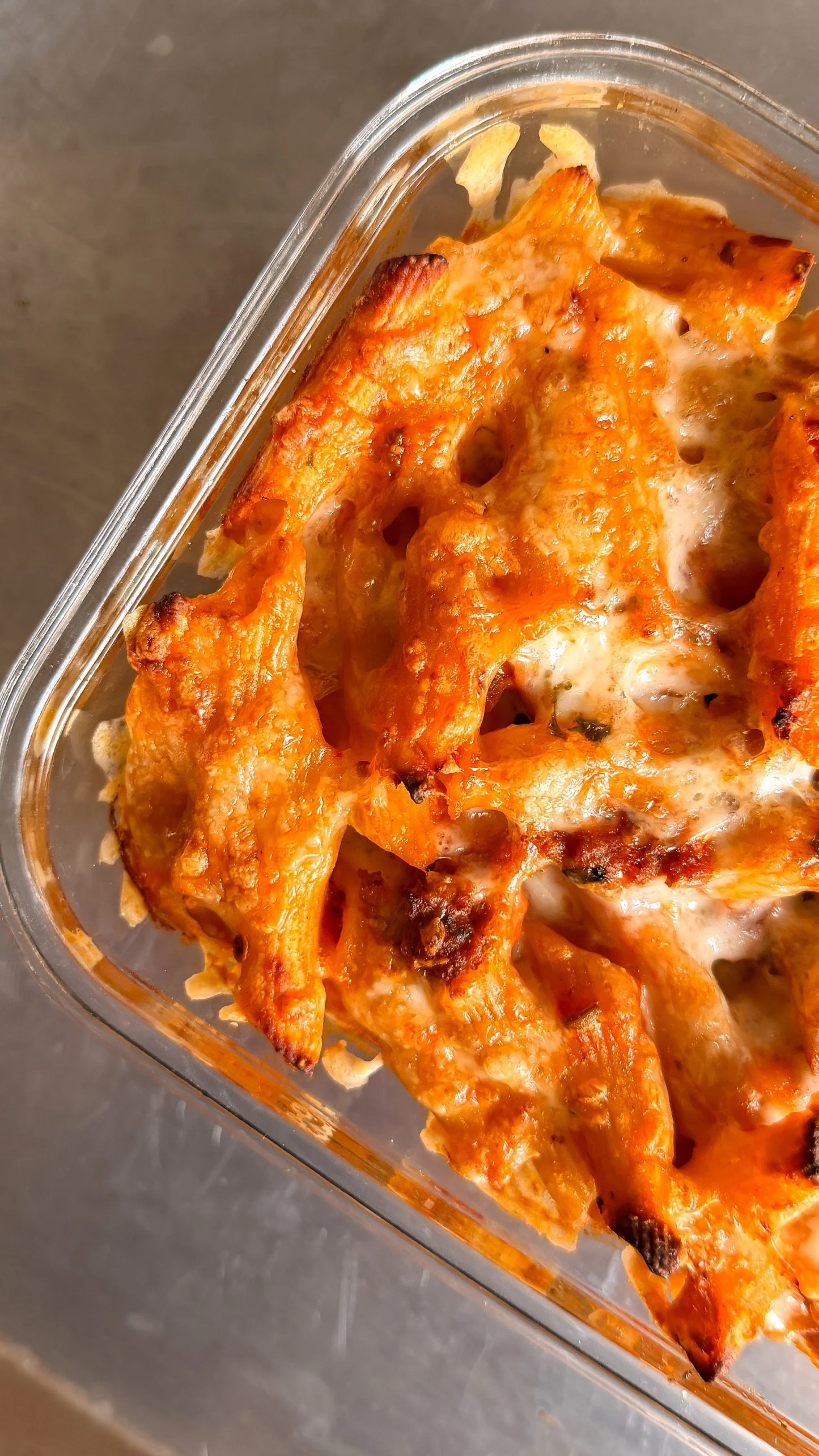
Bake at 200°C for 15–20 minutes
→ until bubbling and slightly charred on top.
(Optional: broil for 2–3 minutes for that deeper colour)